After years of dealing with ongoing health issues following COVID and the vaccine, one thing became increasingly clear:
This wasn’t just a surface-level problem.
It felt deeper—systemic. And a big part of that led me to focus on something I hadn’t fully appreciated before:
The gut.
Why the Gut Became the Focus
When you’re dealing with chronic symptoms—fatigue, inflammation, nervous system issues, poor recovery—it’s easy to chase symptoms.
But over time, I started to see patterns pointing back to gut health:
- Food sensitivities
- Delayed reactions to meals
- Inflammation that didn’t fully resolve
- Immune dysregulation
- Brain fog and mood swings
I had no beneficial bacteria, exactly like the reports coming in from others around the world. Something from COVID/the Jab, or both is wiping out our beneficial microbes in our gut. At the same time, covid spike-like proteins similar to animal venoms are being found in the Gastrointestinal Tract of ‘long-COVID’ sufferers. Look into Dr Bryan Ardis and his research for more context https://thedrardisshow.com/
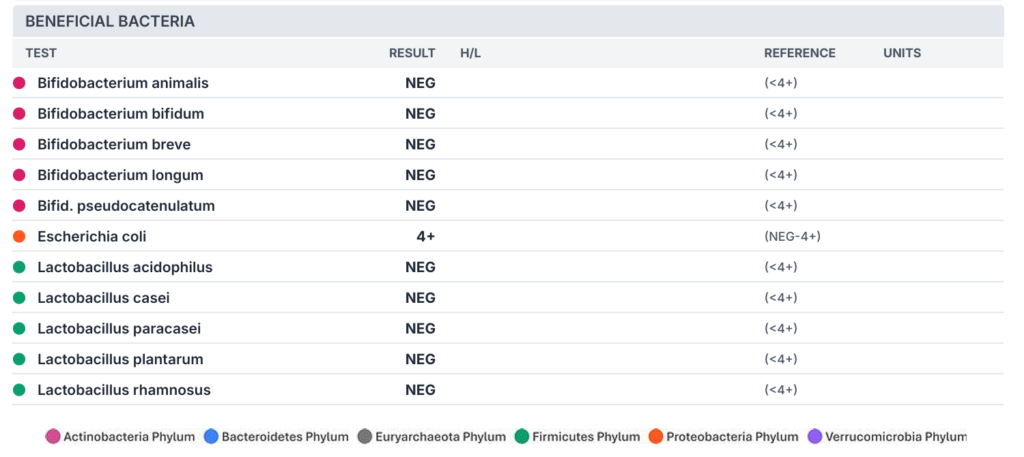
The gut isn’t just about digestion—it plays a central role in the immune system, inflammation, and even neurological function. How could I win this back? Interestingly, my wife had an almost identical gut microbiome to mine and we were both suffering the same symptoms.
So instead of chasing symptoms, I shifted toward rebuilding the foundation.
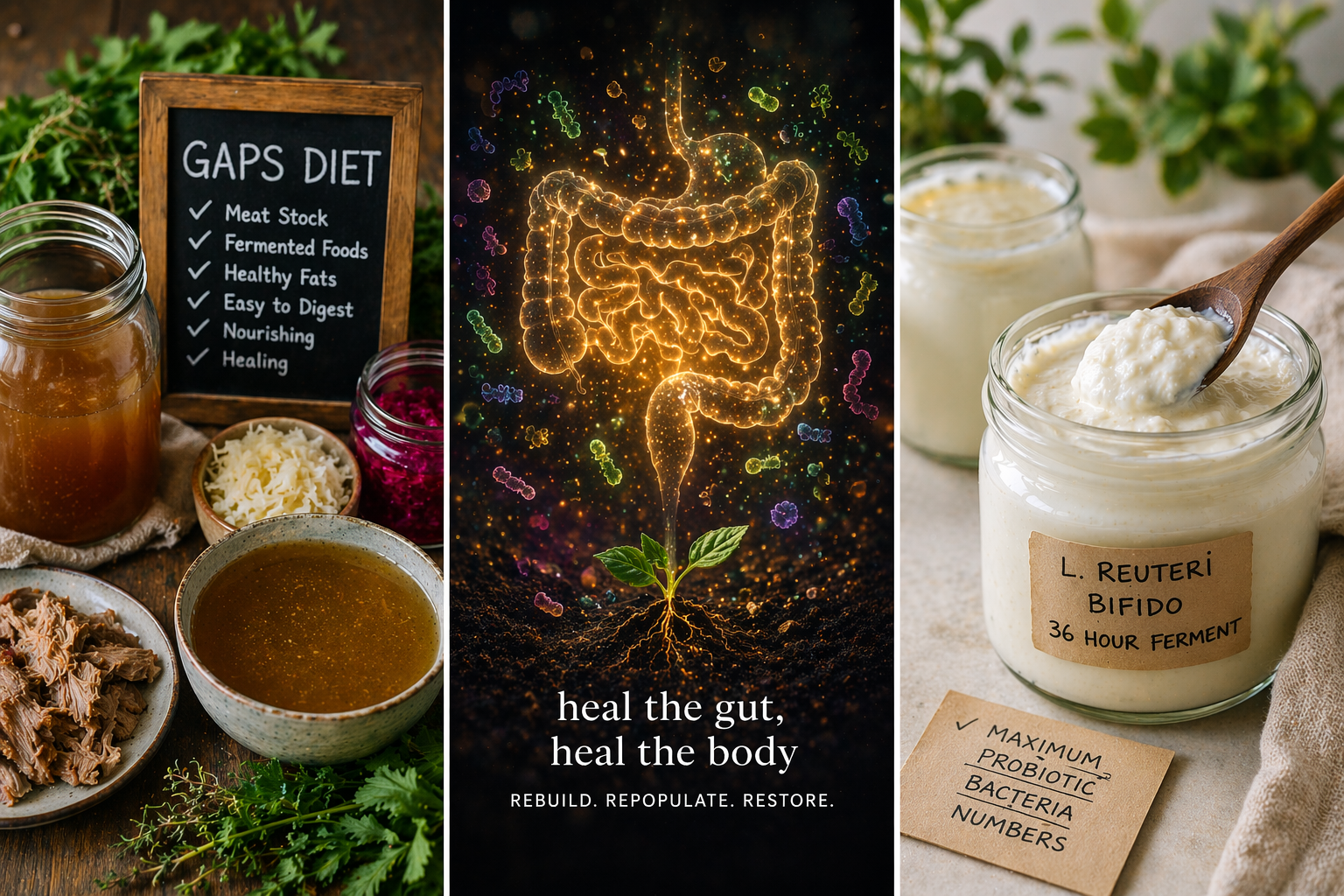
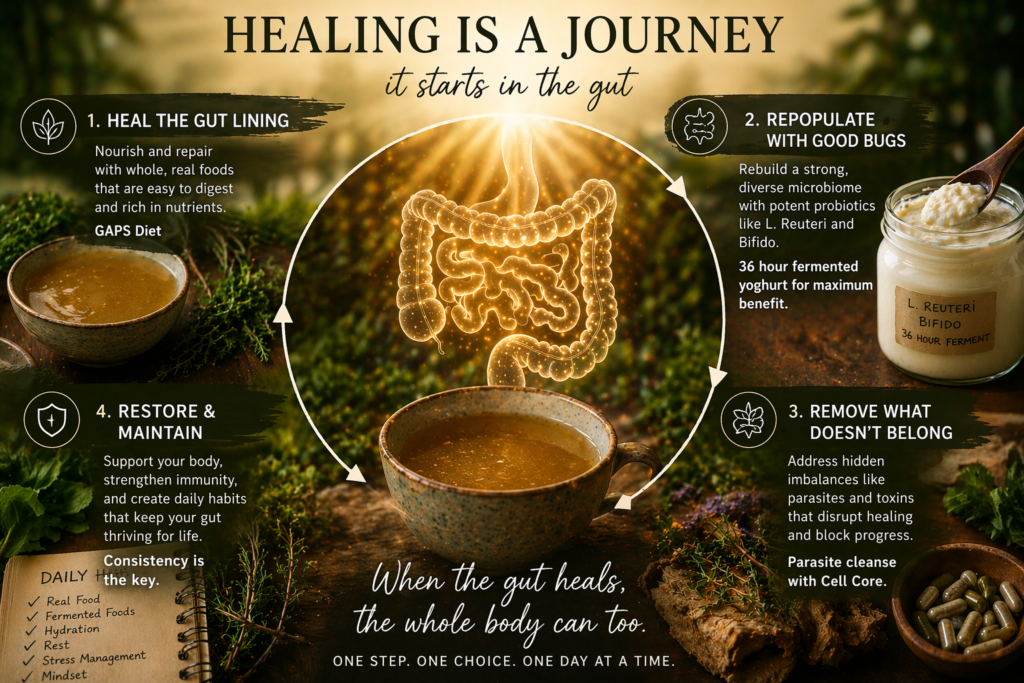
Starting the GAPS Diet
That’s where the GAPS Diet came in.
The idea behind GAPS is simple, but powerful:
- Remove foods that irritate or damage the gut
- Focus on nutrient-dense, easy-to-digest meals
- Support healing of the gut lining
- Rebuild the microbiome
It’s not a casual diet—it requires commitment.
The early stages are quite restrictive, focusing heavily on:
- Meat with bone-in stock
- Slow-cooked meats
- Fat-laden meals with no starch
- Cooked vegetables added in gradually
- Fermented foods
And then foods are slowly reintroduced once the gut has had time to heal and rebalance.
At first, it felt like a big shift. But over time, my body started responding. My symptoms reduced dramatically and I started to pass healthy stools consistently. Each day my energy came back little by little, to the point I starting feeling like my old self.
Rebuilding the Microbiome
A big part of this process wasn’t just removing foods—it was actively rebuilding the gut ecosystem.
That meant introducing high-quality probiotics in a more intentional way.
One of the biggest game changers was making homemade yoghurt fermented for 36 hours.
Why 36 hours?
Because longer fermentation:
- Drastically increases beneficial bacteria counts
- Reduces lactose almost completely
- Makes it easier to digest
- Creates a much more potent probiotic food
I focused heavily on strains like:
- Lactobacillus reuteri
- Bifidobacterium
These are known for supporting:
- Gut barrier integrity
- Immune balance
- Reduction in inflammation
Instead of relying purely on supplements, this became a daily, food-based way to consistently repopulate the gut.
Addressing the Deeper Layer: Parasites & Toxins
Another piece of the puzzle was looking beyond just bacteria.
There’s increasing awareness that parasites and microbial imbalances can persist in the gut and interfere with healing.
As part of that, I incorporated a structured parasite cleanse using CellCore Biosciences protocols.
The goal wasn’t just “killing parasites”—it was:
- Supporting detox pathways
- Reducing overall toxic burden
- Creating a better environment for beneficial bacteria to thrive
This step needs to be approached carefully, but for me, it felt like it addressed something that diet alone wasn’t fully resolving.
What Changed
None of this was overnight.
But over time, the cumulative effect of:
- Cleaning up the diet
- Supporting the gut lining
- Rebuilding the microbiome
- Addressing deeper imbalances
…started to show.
I noticed:
- More stable energy
- Better digestion
- Reduced reactivity to foods
- Improvements in overall resilience
It wasn’t a straight line, but it was progress.
What I Learned
If there’s one takeaway from this process, it’s this:
Healing often starts in places you can’t see.
The gut plays a central role in so many systems that when you support it properly, the ripple effects can be significant.
That said, this isn’t a one-size-fits-all approach.
The GAPS Diet is intensive.
Parasite cleansing needs to be done thoughtfully.
And rebuilding the microbiome takes time and consistency.
Final Thoughts
For me, focusing on gut health became a turning point.
Not because it “fixed everything” overnight—but because it gave my body the conditions it needed to start repairing.
If you’re dealing with ongoing health challenges, especially ones that don’t seem to fully resolve, it may be worth looking deeper—at the gut, the microbiome, and the foundations of health.
Sometimes the most powerful changes come from rebuilding, not just treating symptoms.